

Accurate chairman letter shareholder statement multilingual translation governance ensures that international investors receive consistent strategic messaging and maintain confidence in a company's financial reporting. By balancing regulatory precision with professional tone, these translated documents uphold corporate transparency and meet strict audit requirements across global markets.
A Chairman letter is often viewed as a piece of corporate storytelling; however, for multinational firms, it is a critical instrument of governance that demands absolute linguistic parity. The primary challenge lies in translating these high stakes narratives into French, German, and Spanish without sacrificing legal precision or strategic intent. When a shareholder in Madrid interprets a fiscal projection differently than one in London, the resulting information asymmetry creates a profound fiduciary risk. This article examines why treating the shareholder statement as a governed multilingual artifact is essential for maintaining global compliance. We will explore strategies for preserving technical precision across major European languages, the necessity of integrated InDesign workflows, and the rigorous standards required to ensure your annual report speaks with a single, authoritative voice to every investor, regardless of their native tongue.
Beyond Storytelling: The Chairman Letter as a Regulatory Compliance Document
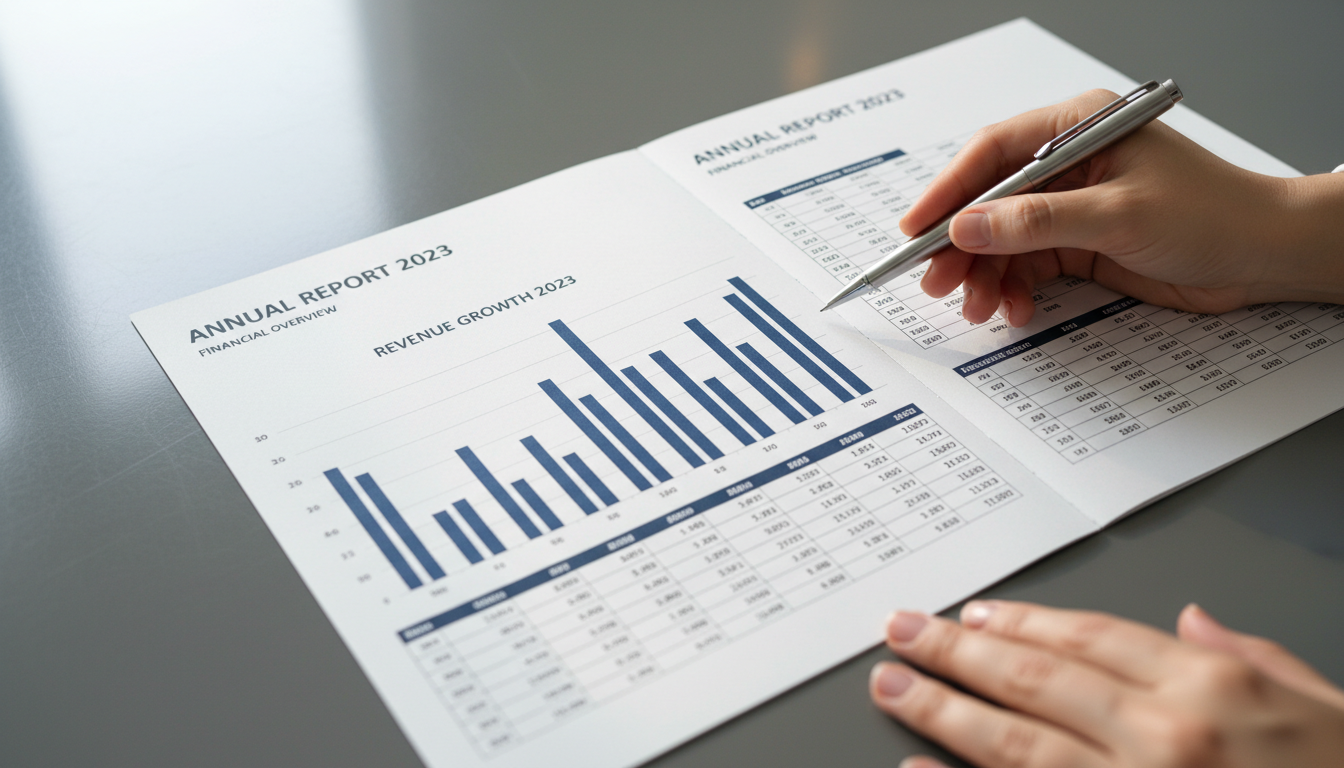
The Chairman’s letter is frequently dismissed as a stylistic introduction or a marketing exercise; however, in the context of institutional reporting, it functions as a primary governed artifact. While a CEO’s statement often focuses on operational narrative, the Chairman’s letter serves as the crucial bridge between rigid financial statements and investor expectations regarding oversight and long-term value. Every word carries the potential to shift market perception or impact regulatory standing, making it a document that requires fiduciary-grade scrutiny.
At exportbridge.biz, we view this document not as a standard translation task, but as a high-precision instrument. The transition from German or French into English or Spanish involves more than linguistic fluency. It requires an understanding that certain sections demand strict fidelity to accounting principles, while others require a controlled adaptation of leadership rhetoric. When a Chairman discusses “resilience” or “strategic realignments,” these are not mere buzzwords; they are signals to the market that must be mirrored exactly in every language version to prevent information asymmetry. The chairman letter shareholder statement multilingual translation governance process must therefore account for the legal weight of the original text.
Utilising precision financial translations ensures that the narrative remains tethered to IFRS standards and banking terminology. This prevents the tone drift that occurs when content is treated as creative copy rather than a disclosure document. By combining this linguistic rigor with integrated layout services, we eliminate the risk of late-stage manual errors that can compromise the integrity of the board’s message. In this view, the letter is not just a story; it is a vital component of the company’s regulatory and governance framework.
The Risks of Asymmetric Information in Multilingual Shareholder Statements
The conceptualisation of the Chairman’s letter as a governed artifact leads directly to a primary concern of transparency: the mitigation of asymmetric information. In a multilingual reporting environment, fiduciary risk arises when the German, English, and French versions of a shareholder statement do not convey an identical level of confidence, risk, or strategic intent. If an investor reading the French version perceives a higher level of caution than an investor reading the English text, the company has failed to provide equitable disclosure.
This discrepancy is often rooted in what academic research identifies as impression management in bilingual reporting. Studies indicate that companies occasionally, whether intentionally or through linguistic oversight, allow the tone of a secondary language version to become more optimistic or less precise regarding risks than the original source. This tone drift creates a significant governance gap. To maintain regulatory validity, the chairman letter shareholder statement multilingual translation governance process must ensure that the disclosure quality remains uniform across all jurisdictions.
Achieving this uniformity requires more than literal linguistic substitution. A word-for-word translation can inadvertently alter the weight of a statement due to the differing rhetorical norms of each language. For example, a standard German phrasing regarding market volatility might sound overly alarmist when translated literally into English, or conversely, a confident English strategic outlook might seem unsubstantiated in a Spanish context. Harmonising these versions necessitates precision financial translations that balance linguistic nuance with strict IFRS standards and banking terminology.
By focusing on the perfect balance of transparency and brand identity, issuers can ensure that the narrative provided to a shareholder in Frankfurt is functionally identical to the one provided to an analyst in London or Paris. Without this rigorous alignment, the Chairman’s letter risks becoming a source of market confusion rather than a tool for clarity. This alignment is further protected through expert contractual translations when reporting duties intersect with legal obligations.
Maintaining Fiduciary Precision across EN, FR, DE, and ES
Achieving this level of transparency requires navigating the complex intersection where leadership rhetoric meets rigid accounting standards. In a Chairman’s letter, words like “resilience” or “volatility” serve as qualitative proxies for quantitative data found deeper in the report. If “resilience” is translated as “Belastbarkeit” in one context and “Widerstandsfähigkeit” in another, or if the French “résilience” carries a different strategic weight than the Spanish “resiliencia,” the narrative cohesion begins to erode. Maintaining chairman letter shareholder statement multilingual translation governance demands that these terms remain anchored to their specific IFRS and banking definitions across all four languages.
The linguistic challenge varies significantly by jurisdiction. German corporate communication often prioritises technical precision and structural complexity, while French requires a balance of stylistic elegance and analytical clarity. Spanish translations must avoid the common pitfall of overly descriptive phrasing that can dilute the directness of a board’s commitment. By utilising precision financial translations, we ensure that the English version provides the directness expected by global analysts without sacrificing the nuanced intent of the German or French source text.
Protection of the board’s message is predicated on this strict alignment with international reporting standards. At exportbridge.biz, we synchronise terminology glossaries before the first draft is translated, ensuring that every strategic claim is backed by appropriate expert contractual translations where legal obligations are cited. This rigorous methodology prevents subtle shifts in meaning that could otherwise lead to regulatory scrutiny or investor doubt; it provides a unified voice that remains consistent through every reporting cycle.
Why Integrated InDesign Workflows are Essential for Governance

The integrity of a Chairman’s letter depends not only on the words chosen but also on how they are presented in the final layout. A common but significant risk in corporate reporting is the translator-designer handoff. When a text leaves the hands of a financial expert and is passed to a graphic designer who lacks specific banking and IFRS knowledge, the governance of the document is compromised. Simple layout adjustments can lead to hyphenation errors that change the meaning of technical terms, accidental deletions of qualifying phrases, or line breaks that disrupt the logical flow of a strategic argument.
To mitigate these risks, exportbridge.biz utilises integrated layout services where a single expert manages both the linguistic translation and the Adobe InDesign production. This unified workflow ensures that the final, publication-ready INDD or IDML files maintain identical visual hierarchy and meaning across English, French, German, and Spanish. By eliminating the back-and-forth between disparate teams, we prevent the version creep that often occurs during multiple rounds of revisions.
Maintaining chairman letter shareholder statement multilingual translation governance means ensuring that a German investor sees the same emphasis on strategic agility as an English reader, without the risk of layout-induced errors. By applying precision financial translations directly within the InDesign environment, we deliver a document that is ready for immediate distribution, free from the typographical missteps that often plague traditional agency handoffs. This approach guarantees that the board’s fiduciary message remains intact from the initial draft to the printed page.
Harmonising Tone: Balancing Transparency and Storytelling in Investor Letters
The structural integrity of the layout facilitates the next layer of reporting, which is the harmonisation of tone. While technical compliance lists often answer the question of what information should be included in an annual report, the Chairman’s letter provides the vital qualitative context that raw data cannot. It acts as the definitive lens through which the strategic review, sustainability narrative, and risk disclosures are viewed. However, maintaining a consistent corporate voice across four languages requires balancing the transparency demanded by regulators with the storytelling expectations of global investors.
Effective chairman letter shareholder statement multilingual translation governance ensures that the board’s judgment and confidence remain identical in every version. Tone drift is a significant risk when multiple agencies or fragmented internal teams manage separate languages; a phrase that sounds decisive in English might appear unsubstantiated in German if not handled by a specialist familiar with both cultural expectations and banking terminology. By establishing a single point of accountability for precision financial translations, issuers prevent the dilution of their strategic intent. This unified approach ensures that the letter remains a single governed artifact, where the narrative confidence in Paris perfectly mirrors the executive judgment delivered in London or Frankfurt, protecting the company from the risks of information asymmetry.
A Checklist for Board-Ready Multilingual Chairman Statements

Establishing a rigorous framework for the production of the Chairman’s letter is the final step in securing regulatory and strategic alignment. To maintain effective chairman letter shareholder statement multilingual translation governance, Investor Relations teams should adopt a checklist that prioritises technical accuracy and visual integrity from the outset.
Pre-emptive Glossary Alignment: Before the first draft is finalised, define a multi-language glossary for the year's core themes. If the strategy focuses on specific concepts like capital efficiency or market resilience, these terms must be locked across EN, FR, DE, and ES to prevent divergent interpretations during the translation phase.
Reporting Continuity Audit: Verify that this year’s terminology aligns with the previous report. Inconsistent naming of strategic pillars or financial metrics across reporting cycles creates unnecessary confusion for long-term institutional investors and analysts.
Visual Expansion Planning: Ensure the InDesign layout is built to accommodate the inherent text expansion of German and French, which often require 20 to 30 percent more space than English. By utilising integrated layout services, teams can avoid last-minute font size reductions that compromise the document’s readability and professional aesthetic.
Fiduciary Tone Verification: The English version, often labeled a convenience translation, must carry the same legal weight and nuance as the original source. Use precision financial translations to ensure that qualitative descriptors of risk or governance oversight do not lose their impact or precision.
Contractual Consistency: Where the letter references specific legal mandates, board resolutions, or bylaws, confirm that expert contractual translations are used to maintain absolute terminological precision aligned with the company’s legal filings.
By following these practical steps, issuers ensure that the final publication is not just a collection of translated pages, but a unified governed artifact ready for the scrutiny of the global capital markets.
A chairman letter is more than just a formal statement; it is a vital document that demands absolute precision across all linguistic versions. Ensuring that your strategic intent remains consistent in every market protects your reputation and builds lasting shareholder trust. If you want expert help navigating these complex requirements, our team provides specialised contractual translations tailored for governance and legal accuracy. Maintaining clarity across borders is a significant challenge, but with the right professional support, your international communications will remain both compliant and impactful.