
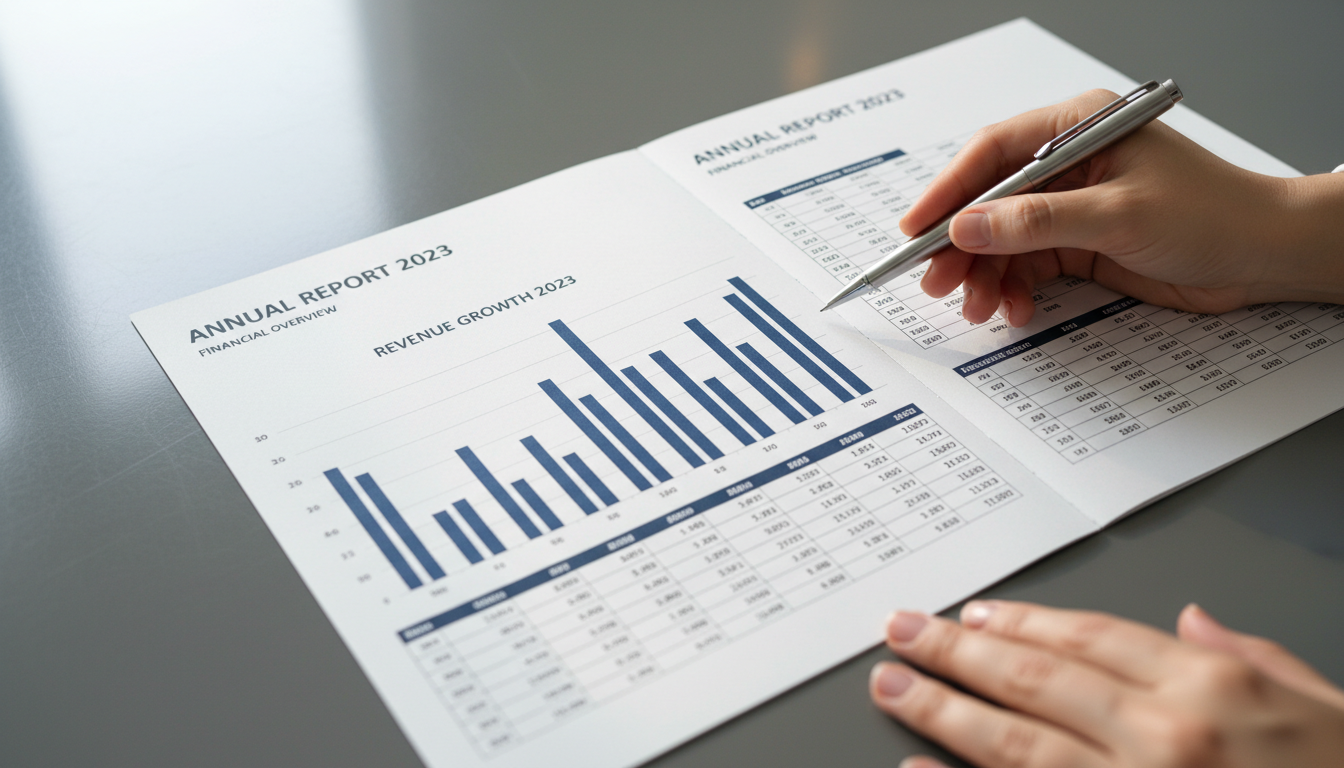
Effective board reporting requires a standardized structure paired with accurate management documents multilingual translation to ensure global stakeholders receive consistent financial and strategic insights. Aligning these elements preserves regulatory validity across jurisdictions; it also streamlines the audit process by maintaining terminological precision throughout every version of the report.
Presenting a high-stakes report to an international board only to find the layout broken or the tone inconsistent is a nightmare for executive teams. When documents cross borders, the standard of excellence often suffers from poor structural planning and linguistic misalignment. This disconnect does more than just look messy; it undermines the authority of the data and creates friction in global decision-making processes. To maintain a board-ready standard, organizations must understand that professional translation is not a final step but a structural requirement from the outset. In this guide, we explore the essential components of elite management documentation. You will learn how to manage text expansion in languages like German and French, how to harmonize terminology across complex reporting suites, and how to bridge the gap between linguistic precision and visual design to ensure your message remains professional in every language.
Defining the Board-Ready Standard in Multilingual Reporting
A board-ready document serves as the definitive voice of corporate leadership. It must convey authority and immediate readability, regardless of the language in which it is consumed. For international firms operating across borders, a report is only as effective as its weakest translation. A minor linguistic ambiguity in a German financial statement or an inconsistent term in a French executive summary can erode the perceived reliability of the entire publication, signaling a lack of coordination to investors and regulators alike.
While generic templates might suffice for internal memos, corporate issuers and financial institutions require a more rigorous framework. High-stakes management documents multilingual translation demands more than just replacing words; it requires a deep alignment with IFRS standards and specific banking terminology. Most services focus on static templates that fail to account for how language impacts visual flow. In contrast, true board-readiness emerges from the synergy between technical terminology and document architecture.
Achieving this standard requires an integrated translation and InDesign production workflow. By treating the layout as an extension of the meaning, the visual hierarchy remains intact across English, German, French, and Spanish versions. This holistic approach prevents the fragmentation that occurs when language and design are treated as separate silos, delivering a final product that is ready for immediate distribution to the board and external stakeholders.
The Core Components of High-Stakes Management Documentation
Effective board reporting relies on three distinct pillars, each presenting unique linguistic hurdles. The management documents multilingual translation process must account for these differences to ensure the final publication maintains its integrity across all language versions.
The Executive Summary sets the strategic tone. For a French audience, this section must project a sense of decisive authority, often utilizing a more elevated rhetorical style. In contrast, a German version requires extreme syntactic precision to avoid any ambiguity regarding executive intent. Failing to adjust this tone can make the leadership appear either too vague or overly aggressive, depending on the linguistic context. A translation that ignores these cultural expectations risks undermining the perceived competence of the board.
The Management Discussion and Analysis (MD&A) adds a layer of narrative complexity. This component expands on simple templates by integrating cross-border regulatory nuances. The translation must ensure that strategic explanations remain consistent with local legal definitions of risk and performance. A phrase that is legally sound in English may require specific wording in Spanish to meet local disclosure expectations without altering the underlying message. This is where the synergy between technical terminology and document architecture becomes vital; the narrative must flow logically while remaining within the strict boundaries of corporate law.
Financial Statements represent the most technical pillar. Here, the focus shifts entirely to IFRS compliance and terminology consistency. Every line item must be mapped precisely to its equivalent in the target language to ensure absolute data integrity.
Reporting Pillar | Linguistic Focus | Regulatory Anchor |
|---|---|---|
Executive Summary | Decisive authority vs. technical precision | Corporate Governance |
MD&A | Narrative cohesion across legal frameworks | Disclosure Compliance |
Financial Statements | Terminology mapping (EN, DE, FR, ES) | IFRS Standards |
This tripartite structure ensures that the document is not merely a translated file, but a functional tool for international corporate communication. By addressing these components individually, issuers avoid the pitfalls of a generic approach that fails to satisfy either regulators or sophisticated investors.
Why Document Structure Dictates Translation Quality

In financial reporting, a layout is far more than a decorative frame; it functions as a critical container for the narrative and data pillars mentioned previously. When working within Adobe InDesign, every column width, table cell, and area of white space serves a specific communicative purpose. For instance, the white space surrounding a key performance indicator (KPI) directs the reader’s eye to the most essential information. However, when these containers are rigid, the translation quality inevitably suffers.
The primary challenge lies in linguistic expansion. A German translation frequently expands by 20 to 30 percent compared to its English source. If a designer creates a tight, multi-column layout based solely on English text, a German translation will likely break the layout, leading to text overflows, awkward hyphenations, or broken table structures. This physical limitation often forces translators to truncate complex financial concepts just to fit the space, which compromises the integrity of the report.
This is where management documents multilingual translation must diverge from standard agency workflows. Rather than treating the text as a separate entity to be poured into a template, our integrated translation and InDesign production treats language and layout as a single, unified workflow. We manipulate the InDesign environment in real-time to accommodate the specific character counts and syntactic requirements of German, French, and Spanish.
This simultaneous adjustment ensures that the visual hierarchy, the balance of information that makes a document board-ready, remains consistent across all versions. By adjusting tracking, leading, or column geometry during the translation process, we prevent the poor formatting choices that often signal a lack of professional oversight. Meaning is preserved because the container is purposefully designed to hold it.
Managing Text Expansion in German, French, and Spanish Layouts
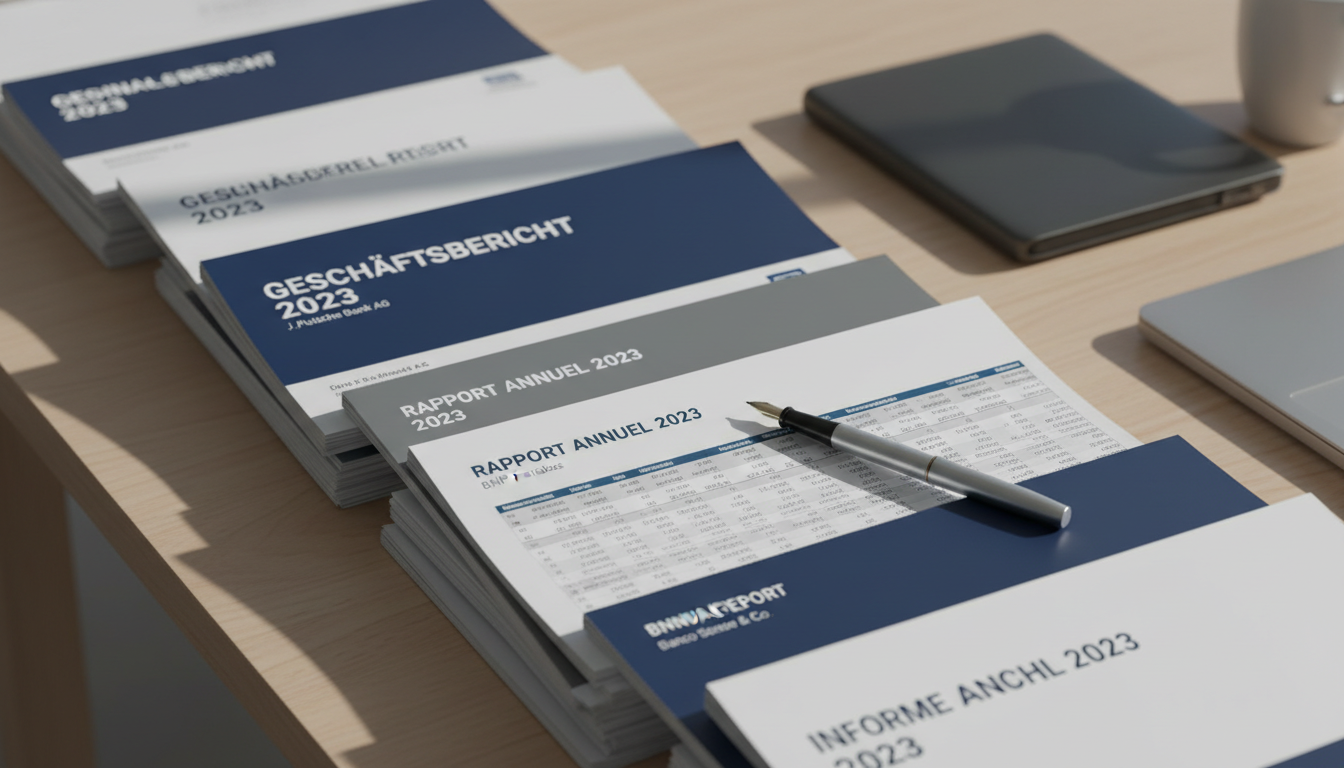
Linguistic expansion is not uniform; it manifests differently depending on the target language’s syntax and morphology. In Spanish and French, financial narratives frequently demand greater horizontal space. This is due to the analytical nature of Romance languages, where concise English noun clusters are replaced by longer prepositional phrases. A single English line describing year-over-year revenue growth often stretches significantly in Spanish, potentially pushing critical data off the page or forcing awkward line breaks that disrupt the reader’s flow.
German presents a different architectural challenge: vertical expansion and word length. Long compound nouns common in German financial reporting, such as those describing specific accounting methods or regulatory frameworks, do not break easily across narrow columns. This often requires vertical flexibility within table headers and text boxes to prevent unsightly gaps or hyphenation errors that distract a sophisticated reader.
Faced with these expansions, many firms resort to shrinking the font size. This is a critical error for a board-ready document. Reducing point size compromises legibility and destroys the carefully calibrated visual hierarchy, making the report appear cramped and secondary to the original version. The integrated translation and InDesign production approach solves this by adjusting the layout environment in real-time. By fine-tuning tracking, leading, and frame geometry during the management documents multilingual translation process, we ensure that the EN, FR, DE, and ES versions all maintain the same level of typographic authority and professional clarity.
Harmonized Terminology: The Glue of Multilingual Management Documents

The integrity of a report relies on more than just visual fit; it depends on the absolute stability of its technical vocabulary. When a firm commissions management documents multilingual translation, the primary risk is fragmented meaning. This occurs when different linguistic teams work in isolation, resulting in a sustainability report that uses different terminology for green bonds or risk exposure than the primary annual report. Such discrepancies, even if subtle, can suggest a lack of internal controls to a discerning auditor or board member.
A single point of accountability eliminates this risk. By centralizing the linguistic process, we ensure that specific banking terminology and disclosure wording remain identical across every page and every language version. For example, a term like amortized cost or impairment loss must be rendered with perfect consistency according to IFRS standards in English, French, German, and Spanish. There is no room for stylistic variation when legal compliance is at stake.
To maintain this rigor, harmonized glossaries are integrated directly into our integrated translation and InDesign production workflow. This technical environment allows the expert to cross-reference previous disclosures and industry-specific lexicons in real-time. By locking in terminology at the source, we ensure that the German Abschreibung and the Spanish amortización reflect the exact same accounting principle as the English source text. This unified approach transforms a collection of translated pages into a coherent, authoritative corporate voice that withstands the scrutiny of international financial institutions and regulatory bodies.
The Dangers of the Translator-Designer Handoff
The standard workflow for most firms involves a fragmented cycle: text is exported to Word for translation, then returned to a graphic design team for layout. This handoff is where the structural integrity of high-stakes reporting often collapses. A graphic designer, typically focused on visual aesthetics rather than IFRS nuances, must manually copy-paste thousands of words across multiple languages. Without linguistic fluency, they may inadvertently break complex tables, delete critical disclosure qualifiers, or introduce formatting errors that alter the technical meaning of the data.
In the realm of management documents multilingual translation, the most significant risks emerge during the post-editing phase. When a finance director identifies a terminology error in a PDF proof, that correction must be manually retrofitted into the Adobe InDesign file. This manual intervention often creates a domino effect of layout shifts or new typos that go unnoticed until the document is published.
Exportbridge eliminates this vulnerability through integrated translation and InDesign production. By working directly within the IDML or INDD files, we bypass the dangerous back-and-forth between disparate teams. The expert who understands the financial context is the same person managing the typographic environment. This workflow ensures that the final file delivered is publication-ready, requiring no manual layout adjustments or risky copy-pasting by internal teams.
Checklist for Reviewing Multilingual Board Presentations
Finalizing a board-ready report requires a rigorous audit that goes beyond simple proofreading. To maintain the integrity of your management documents multilingual translation, use this checklist during the final sign-off:
Data Integrity: Cross-reference all figures; ensure local decimal conventions (commas vs. points) are applied correctly across all language versions.
Visual Hierarchy: Confirm that H1 through H4 header hierarchies remain consistent, ensuring no titles were truncated due to text expansion.
Regulatory Rigor: Verify that IFRS terminology is current and harmonized across every section, from the MD&A to the notes.
Strategic Tone: Audit the French and Spanish versions for rhetorical authority, ensuring the summary reflects the board’s decisive intent.
Through integrated translation and InDesign production, these checks serve as a final validation of quality rather than a troubleshooting exercise.
Effective board level communication relies on the synergy between a well organized document structure and high quality translation. When your internal reporting maintains this level of clarity, it ensures that every stakeholder can make informed decisions regardless of their native language. If you want expert help refining your global reporting assets, you might consider our Financial Translations to maintain total accuracy. Investing in professional support allows your management team to focus on strategy while ensuring your documentation remains board ready and professional.