

Boards must ensure identical meaning across all languages to fulfill their fiduciary duties and maintain transparency with global investors. Establishing a rigorous multilingual executive summary investor presentation governance framework prevents legal risks and builds shareholder trust by integrating professional, industry specific translation at the start of the reporting process.
Managing a global investor roadshow requires immense logistical precision, yet the greatest risk often lies in the subtle linguistic shifts between your English, French, and Spanish decks. When a translated executive summary inadvertently alters a financial covenant or a strategic growth projection, it transcends simple communication and becomes a significant governance failure. Board members must recognize that maintaining identical meaning across all languages is a core fiduciary duty. Inaccurate translations do more than confuse; they trigger regulatory scrutiny and erode institutional trust at critical moments. This article examines the necessity of rigorous governance for multilingual investor presentations. You will learn to identify linguistic compliance risks, harmonize complex IFRS terminology across key markets, and implement an integrated workflow that ensures your visual layout and technical language remain perfectly aligned for high stakes boardroom discussions.
The High Stakes of the Executive Summary in Global Capital Markets
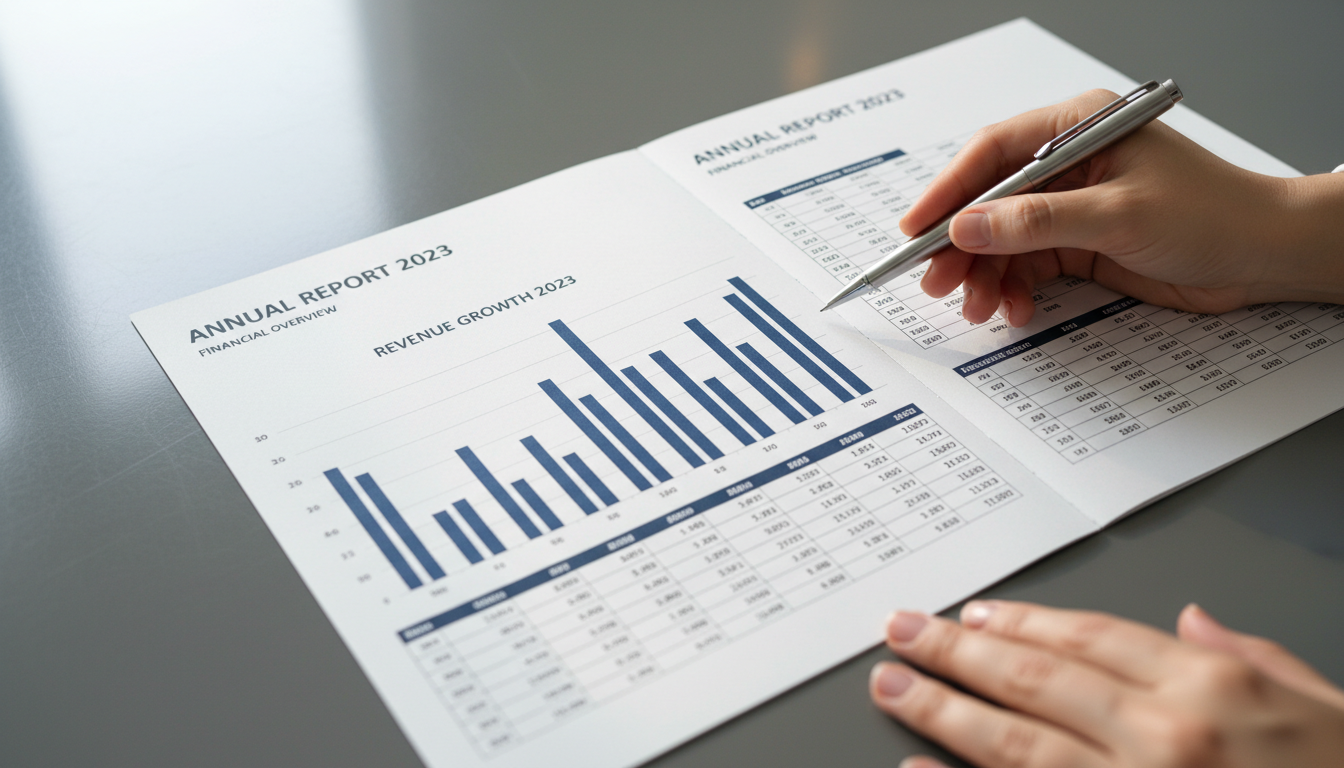
In global capital markets, time is the scarcest commodity. For institutional investors, analysts, and board members, the executive summary of an investor presentation or annual report often serves as the primary, and sometimes only, document reviewed in full. It is the distilled essence of a company’s value proposition and risk profile. When this document is distributed across multiple jurisdictions, a multilingual executive summary investor presentation governance framework becomes essential. The risk is not merely linguistic but structural. A 'governance gap' emerges when subtle semantic shifts occur between the English, German, French, and Spanish versions of a deck, leading stakeholders in different markets to reach diverging conclusions about management’s intent.
The OECD Principles of Corporate Governance underscore that equitable treatment of shareholders depends on the timely and accurate disclosure of all material matters. Fiduciary duty extends beyond the mathematical accuracy of the balance sheet; it encompasses the integrity of the narrative. If the English summary describes a strategy as 'ambitious' while the French version translates it as 'risquée,' the board has failed to provide a uniform basis for evaluation. This discrepancy creates an asymmetric information environment that can undermine investor trust and complicate regulatory standing.
Moving beyond a generic translation approach is critical for maintaining this integrity. Standard agencies often prioritize flow over technical exactitude. In contrast, governance-level precision requires precision financial translations that align every phrase with IFRS standards and specific banking terminology. Achieving this level of identicality ensures that the corporate tone remains consistent, whether the reader is in Frankfurt, Paris, Madrid, or London. To protect the board, investor relations must transition from simple translation to expert legal and contractual translations where the layout and the language are managed as a single, immutable asset.
Linguistic Discrepancy as a Compliance Risk for Board Members
The regulatory landscape for corporate disclosure is shifting toward greater scrutiny of narrative consistency. Under IFRS 18, the introduction of management-defined performance measures (MPMs) places a direct spotlight on how non-GAAP figures are presented and explained. When these measures are detailed in an executive summary, any linguistic drift between the English, French, Spanish, or German versions constitutes a compliance risk. A board member’s liability is not limited to the master document; it extends to every official language version published by the issuer. If a management-defined measure is described as 'recurring' in one language but 'persistent' in another, the discrepancy can be interpreted as an attempt to mislead global stakeholders or obscure volatility.
In this context, standard 'accuracy' is an insufficient metric. A translation might be linguistically accurate in a general sense while failing the test of financial identicality. Identicality requires that the legal and economic implications of a term remain unchanged across jurisdictions. For example, a French 'résultat opérationnel' must align perfectly with the specific English 'operating profit' as defined in the company’s reporting framework, without introducing local semantic variations that could alter an investor's risk assessment. When terminology fluctuates, the company risks 'information leakage' where one market receives a more favorable impression of performance than another.
Boards are increasingly held accountable for the integrity of these multilingual datasets. Fiduciary duty requires directors to ensure that the corporate narrative is not diluted or distorted by the 'last mile' of production. Failure to maintain this level of precision financial translations can lead to regulatory inquiries, shareholder litigation, or demands for restatements. For the Investor Relations Director, this means that the multilingual executive summary investor presentation governance framework must be treated with the same rigor as the audit of the consolidated financial statements themselves. Maintaining expert legal and contractual translations is therefore a strategy for risk mitigation, ensuring the board’s message is legally defensible in every market simultaneously.
Common Pitfalls in Multilingual Investor Presentation Layouts

The bridge between a verified translation and a published document is where the most significant governance failures often occur. Many organizations treat graphic design as a purely aesthetic last mile, yet this phase is frequently where precision financial translations are inadvertently compromised. When a multilingual executive summary investor presentation governance protocol relies on separate translation and design teams, the risk of technical error increases exponentially.
A primary pitfall involves text expansion and reflow within Adobe InDesign. German and French translations frequently require twenty to thirty percent more space than their English counterparts. A graphic designer who lacks proficiency in the target language may unknowingly shorten a text box to maintain layout symmetry, resulting in the omission of critical qualifying footnotes or regulatory disclaimers. These small omissions can strip away the necessary context that makes a financial claim IFRS compliant, creating a discrepancy between the master file and the foreign language version.
Beyond layout issues, semantic integrity is often sacrificed for visual fit. A common mistake occurs when a designer, facing a character limit in a specific graphic element, swaps a lengthy technical term for a shorter synonym. In a financial context, replacing a specific positive indicator with a neutral one to fit a header can fundamentally alter the risk profile presented to an analyst. This handoff between a translator and a non-linguist designer introduces a layer of coordination overhead and human error that undermines the board’s efforts toward identicality. By treating the layout as a variable rather than a fixed extension of the linguistic asset, companies inadvertently invite the very discrepancies that lead to regulatory scrutiny.
Harmonizing IFRS and Banking Terminology Across EN, FR, DE, and ES
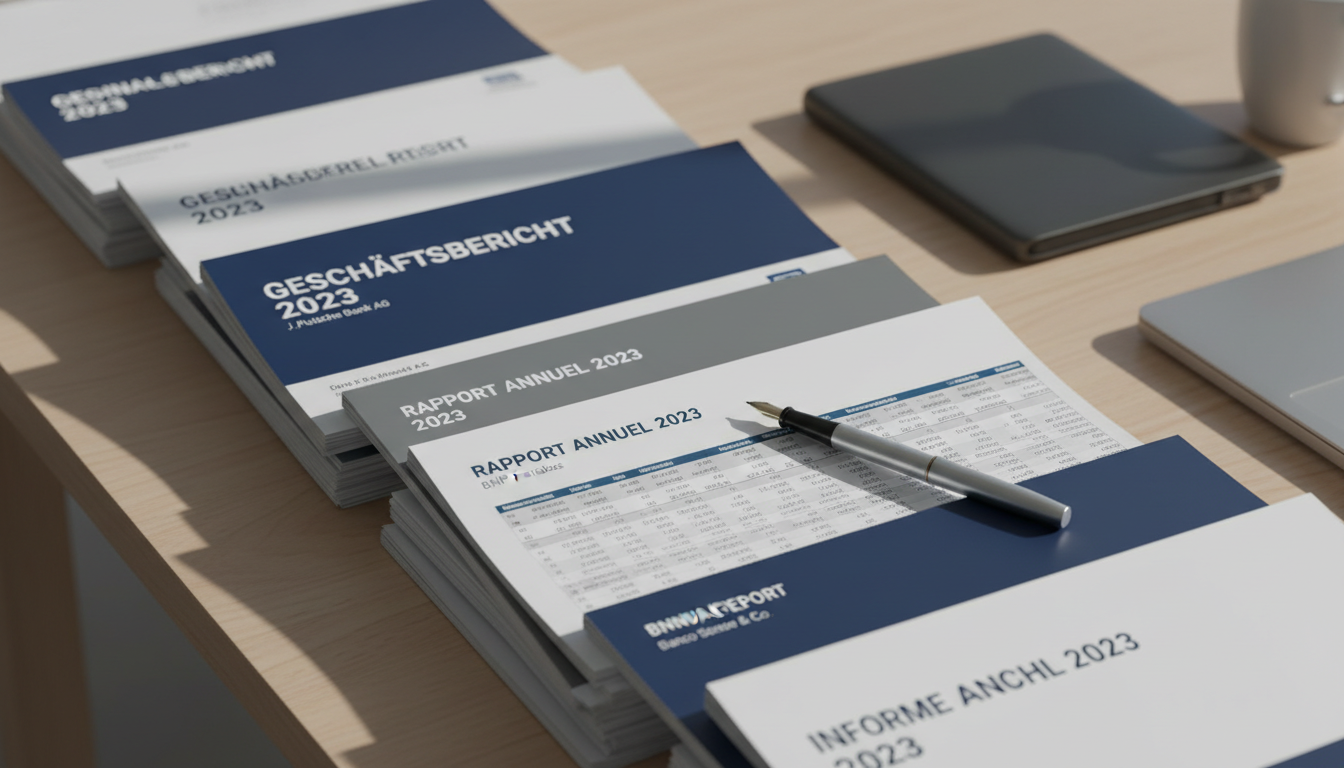
Achieving a robust multilingual executive summary investor presentation governance framework requires more than linguistic fluency; it demands the rigorous mapping of technical taxonomies. In financial reporting, unified glossaries serve as the bedrock of transparency. When an institutional investor analyzes a "cash-generating unit" (CGU), they expect the Spanish "unidad generadora de efectivo," the French "unité génératrice de trésorerie," and the German "zahlungsmittelgenerierende Einheit" to denote the exact same accounting boundary. Any deviation in these terms across language versions can obscure the valuation of assets and lead to fragmented market perceptions.
This technical mapping is especially critical for management-defined performance measures such as "underlying profit." To ensure global stakeholders are comparing "apples to apples," these figures must be translated into their precise equivalents, such as "résultat sous-jacent" or "bereinigtes Ergebnis," while adhering strictly to IFRS disclosure requirements. For financial institutions operating in Catalonia and the broader European market, this precision must also extend to specific banking terminology, including nuances in liquidity coverage ratios or capital adequacy frameworks. General definitions are insufficient when regulatory bodies and analysts demand exactitude.
Terminology consistency is a fundamental pillar of corporate tone. Inconsistent phrasing across the DE, EN, FR, and ES versions of a presentation suggests a lack of internal control, whereas precision financial translations signal institutional stability. By maintaining harmonized glossaries that evolve with regulatory updates, companies ensure that their expert legal and contractual translations remain a reliable source of truth for the capital markets. This discipline ensures that the executive narrative remains untarnished by semantic drift, reinforcing the company's credibility with international asset managers.
The Integrated Workflow: Why One Expert Should Handle Both Language and Layout
The disconnect between linguistic sign-off and final typesetting is the most frequent point of failure in high-pressure reporting cycles. When translation and graphic design are treated as separate workstreams, the probability of manual copy-paste errors or layout-driven omissions increases. A unified multilingual executive summary investor presentation governance strategy requires moving the translation process directly into the source environment, specifically the Adobe InDesign IDML or INDD files.
Working within the native layout software allows a single expert to manage the interplay between technical terminology and visual constraints. In this integrated workflow, the specialist translates with the final page layout in view, immediately resolving text reflow issues that typically cause German or French strings to exceed their allotted space. This approach eliminates the risky back and forth between external agencies and internal design teams, where qualifying footnotes or IFRS-mandated disclaimers are often truncated by designers who do not speak the target language.
For the Investor Relations Director, this model significantly reduces coordination overhead. Instead of managing multiple vendors and cross-referencing versions, there is a single point of accountability for the integrity of the disclosure. This streamlined process ensures that precision financial translations are not just accurate in a draft document; they are correctly formatted and publication-ready in the final deck. By consolidating these functions, companies bridge the gap between compliance and design, ensuring that expert legal and contractual translations remain intact through the final second of disclosure.
Best Practices for Investor Relations Managers and Directors
For the Investor Relations Director, shifting from a linear to a parallel production cycle is the most effective way to safeguard the board. Instead of treating translation as a final task after the English master is locked, integrate precision financial translations into the early drafting stages. This allows for the simultaneous refinement of terminology across German, French, and Spanish, ensuring that the multilingual executive summary investor presentation governance framework is active throughout the document’s evolution.
An Investor Relations Manager should establish a clear protocol for multilingual sign-offs. Rather than presenting the board with a single language version and assuming the others will follow, provide the translated InDesign layouts as part of the final review package. This ensures that every director acknowledges the identicality of the disclosure before it goes live. This practice prevents the common error where a board approves a message that is inadvertently altered during the late-stage desktop publishing phase.
Key operational practices for IR teams include:
Utilizing harmonized glossaries from the first draft to prevent year-over-year terminology drift and ensure compliance with IFRS standards.
Assigning a single point of accountability for both language and layout to eliminate the risky handoff between translators and graphic designers.
Requiring publication-ready files for all languages at the exact moment of the regulatory filing.
By embedding expert legal and contractual translations into the core workflow, IR teams move from reactive damage control to proactive governance, ensuring the company’s narrative remains robust across all global capital markets.
Ensuring that your executive summaries and investor presentations maintain identical meaning across languages is not just about clarity, it is a fundamental fiduciary duty for any global board. Discrepancies in financial reporting can lead to significant regulatory risks and a loss of investor trust. If you want expert help in managing these complexities, our team is ready to support your global strategy. Professional Financial Translations provide the precise oversight needed to protect your reputation and ensure compliance in every market where you operate.